 geezer 61
5 Answers
 country bumpkin
The science of belly button fluff
This entry was posted on February 4, 2012, in Science and tagged belly button, fluff, lint, navel, science. Bookmark the permalink. 8 Comments
Science excels at explaining the unknown, but try as we might there are some things that are remain just beyond our grasp. Why are we here? Where are we going? Why do some people have more belly button fluff than others?
http://en.wikipedia.org/wiki/Navel
Georg Steinhauser is a man who isn’t afraid of a challenge and has come up with a hypothesis regarding why some belly buttons collect more fluff than others, shining light onto one of the greatest mysteries of our time.
The author’s hypothesis is that men’s abdominal hair collect cotton fibers from shirts and transport them into the navel by the normal body movement, supported by the direction of the abdominal hairs and their structure. After several hours, these fibers are compacted to form the typical felt-like material.
The support for this position comes from an experiment in which he collected lint from his navel for 3 long hard years, meticulously recording the weight and what he was wearing that day. Almost an entire gram of material was gathered!
The results showed that newer t-shirts resulted in more navel fluff than older ones, which – whilst interesting – doesn’t really argue for or against the hypothesis.
So he also underwent a personal sacrifice in the name of science and shaved his belly, as well as checked the accumulation of lint in his friend’s navels. No doubt they were proud to be a part of such a noble endeavour.
The combined results of these observations showed that more hair seems to mean more lint, a principle underlined by the fact lint is observed forming in the hair. It may well then gradually move the naval. But why?
Well when the lint was analysed it was found to contain more than just t-shirt material, having absorbed some fat, sweat, dirt etc. which might suggest that it serves some cleaning function. Belly button hair, and the fluff it produces, may well be very important to keeping our stomach holes clean.
Of course, this is only a hypothesis rendered plausible by anecdotal data so further research is needed to determine if this is a valid explanation for the unexplainable.
I, along with the rest of the scientific community, await further results with baited breath. For on that day we shall peer into the very face of god and discover whether stomach hair is really the cause of belly button fluff.
Some of you at this point might be laughing, but the importance of this research cannot be stressed enough. So I will leave you with the final words of the great Georg Steinhauser himself.
https://evoanth.wordpress.com/2012/02/04/the-science-of-belly-button-fluff/
aThe navel (clinically known as the umbilicus, colloquially known as the belly button or umbilical dip) is a scar[1] on the abdomen at the attachment site of the umbilical cord. All placental mammals have a navel, and it is quite conspicuous in humans.[2] Other animals' navels tend to be smoother and flatter, often nothing more than a thin line, and are often obscured by fur as well.
| 13 years ago. Rating: 7 | |
 Dardaigh

It's where you hang all those earrings
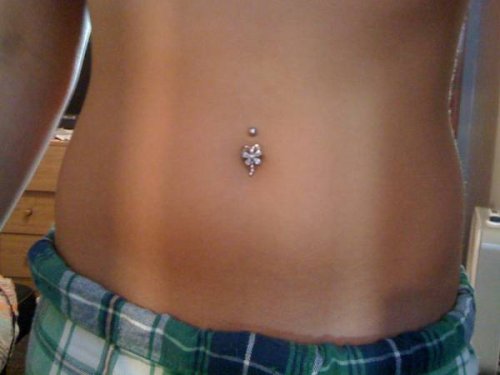 that have lost their mate.
| 13 years ago. Rating: 6 | |

I think I've found the missing sense of humor that Rj has been taking about.
 daren1
 mycatsmom
 clu
clu